Could This Finally Be Their Year? Reuters Finds Texas Democrats Facing Their Most Competitive Election Since the Drought Began in 1994
Most polls show Talarico narrowly ahead and Hinojosa a few points back. Reuters' 40 interviews found three cracks in the Republican coalition - and a GOP that answers with money, party lean and a ground game built to peak late.
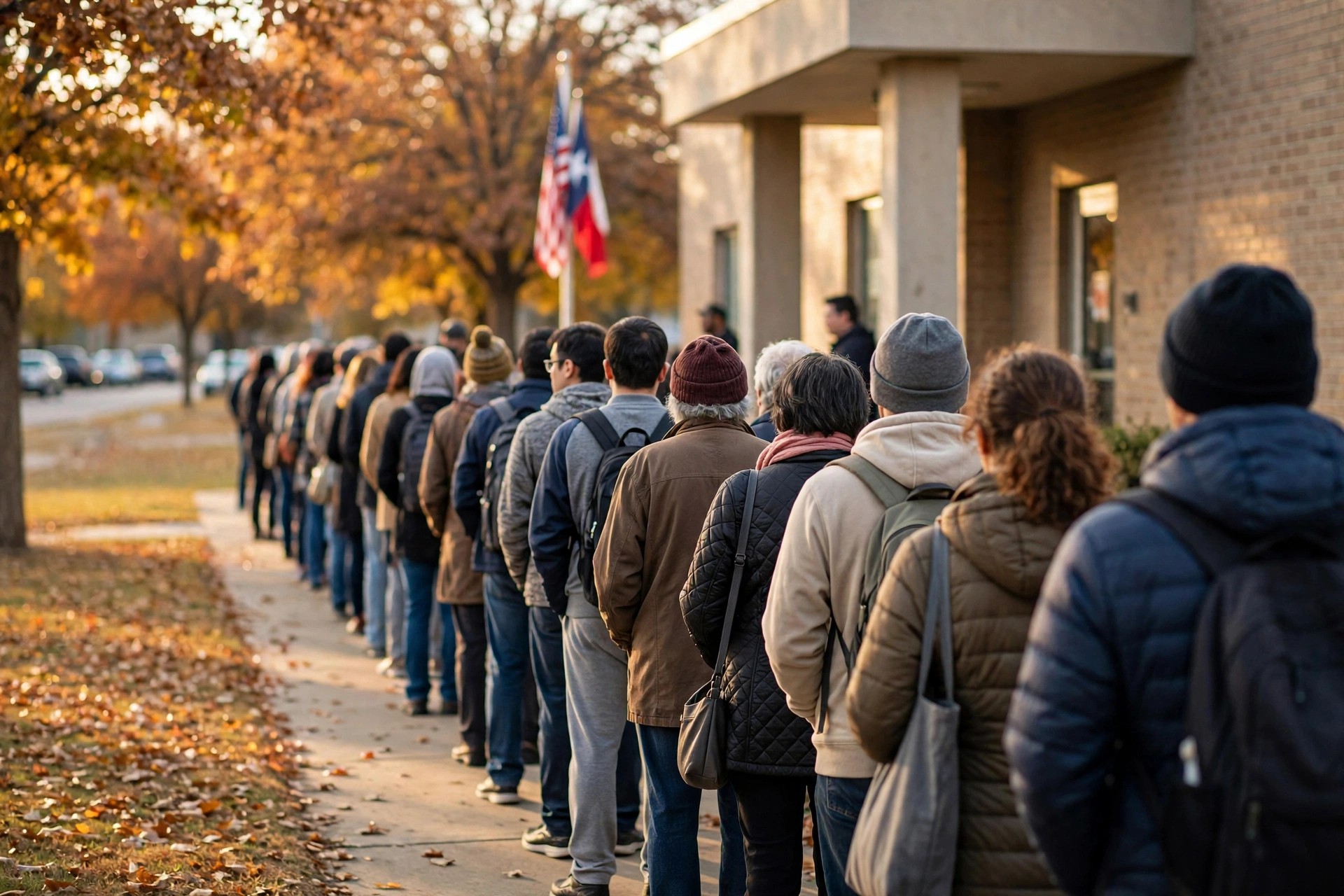
AUSTIN - Texas has been the Democratic Party's great, unrealized hope for three decades, Reuters wrote Friday, in a feature built on interviews with more than 40 voters, activists and organizers on both sides: a vast, fast-changing state that often seems within reach, only to slip away. No Democrat has won statewide office in Texas since 1994 - the longest drought in the nation - and on the eve of a midterm that could decide control of the U.S. Senate, Democrats are dreaming again about breaking it, even as they brace for heartbreak. Most polls show state Rep. James Talarico, 37, a seminarian and former schoolteacher, narrowly ahead of Attorney General Ken Paxton in the Senate race, and state Rep. Gina Hinojosa trailing three-term Gov. Greg Abbott by just a few points in the governor's race.

'This is the most competitive election between the parties that we have seen here since the early stages of Republican hegemony,' James Henson, director of the Texas Politics Project at the University of Texas at Austin, told Reuters. 'If Talarico or Hinojosa win, it's a political earthquake.' For the first time since 1972, Democrats are contesting every state and federal race. Reuters' interviews found three potential cracks in the Republican coalition: Latinos jolted by President Donald Trump's immigration raids; conservative women uneasy about Paxton's alleged marital infidelity; and, to a lesser degree, Republican men squeezed by rising prices and the war with Iran. Among likely Latino voters, Talarico leads 54 percent to 41 and Hinojosa 56 to 42 in UT polling, and about 1.56 million Latinos had cast ballots as of Wednesday - nearly double the number at the same point in 2022, according to the data firm TargetSmart - with Latinos making up roughly 28 percent of early voters, up from 20 percent four years ago.
The Republican answer, in Reuters' telling, is fundamentals. About 49 percent of Texas voters identify with or lean toward the Republican Party, against 40 percent for Democrats in UT polling, and Republicans have spent over $300 million on ads supporting Paxton, dwarfing the $102 million spent for Talarico, according to FEC data. Dave Carney, Abbott's chief strategist, said the party's ground game is peaking late by design: 'We're going to win, absolutely,' he said, referring to both Republican candidates. The women-voter question runs through Paxton's own household: his wife, state Sen. Angela Paxton, filed for divorce last year on 'biblical grounds,' accusing him of adultery; he has declined to discuss the matter publicly. Jill Tate, president of the Texas Federation of Republican Women, estimates about 40 percent of the conservative women her members talk to have doubts about Paxton because of his marital problems, and UT polling shows 71 percent of likely Republican men view Paxton favorably against 59 percent of Republican women. 'This is an election where small increments of voters matter,' Henson said. Neither the Paxton nor the Talarico campaign made its candidate available for a Reuters interview.