MD Anderson's $3.4 Billion Expansion: Inspiration Tower and Prism Will Make Room for Nearly 250,000 Patients a Year
The University of Texas MD Anderson Cancer Center is building the new front door of the Texas Medical Center: a $3.4 billion expansion - Inspiration Tower and Prism, nearly 2 million square feet at Fannin and Holcombe - that will lift its campus to nearly 22 million square feet and its capacity to nearly 250,000 patients a year.
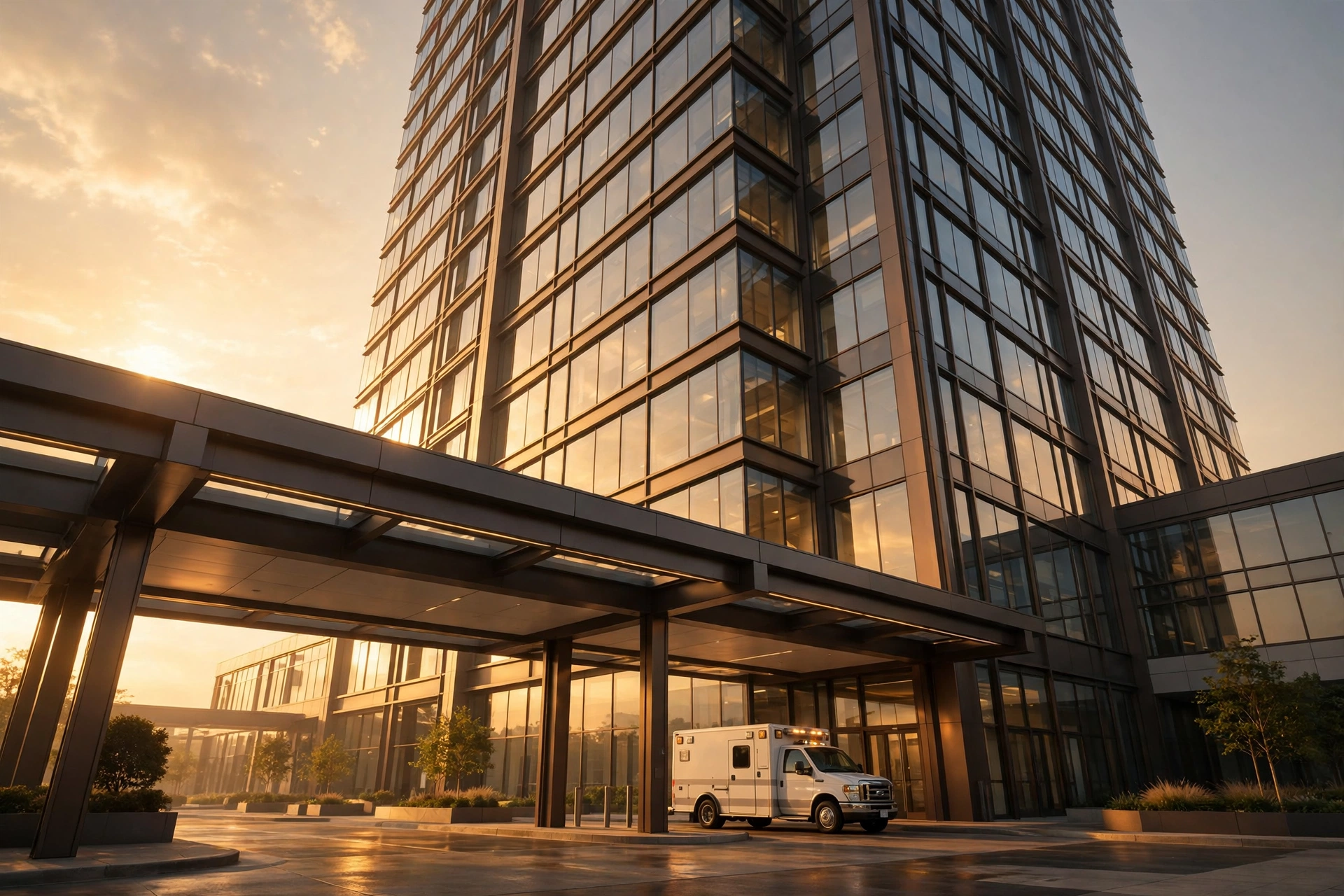
The University of Texas MD Anderson Cancer Center has announced the historic expansion of its Texas Medical Center campus through two new facilities, Inspiration Tower and Prism, which together will serve as the institution's new front door at the corner of Fannin Street and Holcombe Boulevard, according to its release. The two facilities account for nearly 2 million square feet of patient care, radiation oncology and diagnostic imaging space; including other ongoing capital projects, the TMC campus will grow from 16.4 million square feet in 2020 to nearly 22 million square feet by 2032, and the expansion will enable MD Anderson to care for nearly 250,000 patients annually.
Inspiration Tower, anticipated to open in 2032, will be a 1.4 million-square-foot, 25-floor facility - the largest cancer-focused clinical facility in the nation, the institution said. It is planned around disease-specific outpatient clinics, with up to 330 exam rooms, 184 short-stay beds, 162 ambulatory treatment stations, 56 imaging rooms, 24 operating rooms and 38 procedure rooms, plus terraced indoor and outdoor spaces, on-site parking and skybridge connections. "Inspiration Tower and Prism are the future of cancer care," Jeffrey E. Lee, M.D., president ad interim of UT MD Anderson, said in the release.
Prism, scheduled to open in 2030, is the 292,000-square-foot radiation oncology and diagnostic imaging hub next door, connected by a skybridge and marked by a glass facade. It will serve up to 150,000 patients annually - nearly half of all linear accelerator activity in the Texas Medical Center - with 18 radiation vaults, seven radiation simulators, 12 MRI machines, four CT scanners and two PET-CT units, the release said.
Together the two facilities represent a $3.4 billion investment funded by MD Anderson and the UT System alongside philanthropic support. Both are priorities of the institution's $2.5 billion fundraising campaign, Only Possible Here, The Campaign to End Cancer - the largest in its history - which has raised more than $2.22 billion to date from more than 345,000 donors and more than 925,000 gifts, according to the release. For Houston, the project is also a construction and jobs story measured in years: the two openings, in 2030 and 2032, bookend the decade for the Medical Center's biggest institution.