Texas Early Voting Rate Is Slightly Behind 2018: 23.4 Percent in the First Week, and Democratic-Primary Voters Lead for the First Time
Nearly 4.5 million Texans voted in the first seven days - ahead of 2022's pace, just behind the O'Rourke year - and a Republican data analyst's primary-history count puts Democratic-primary voters ahead 35 to 33, a split he calls unprecedented.
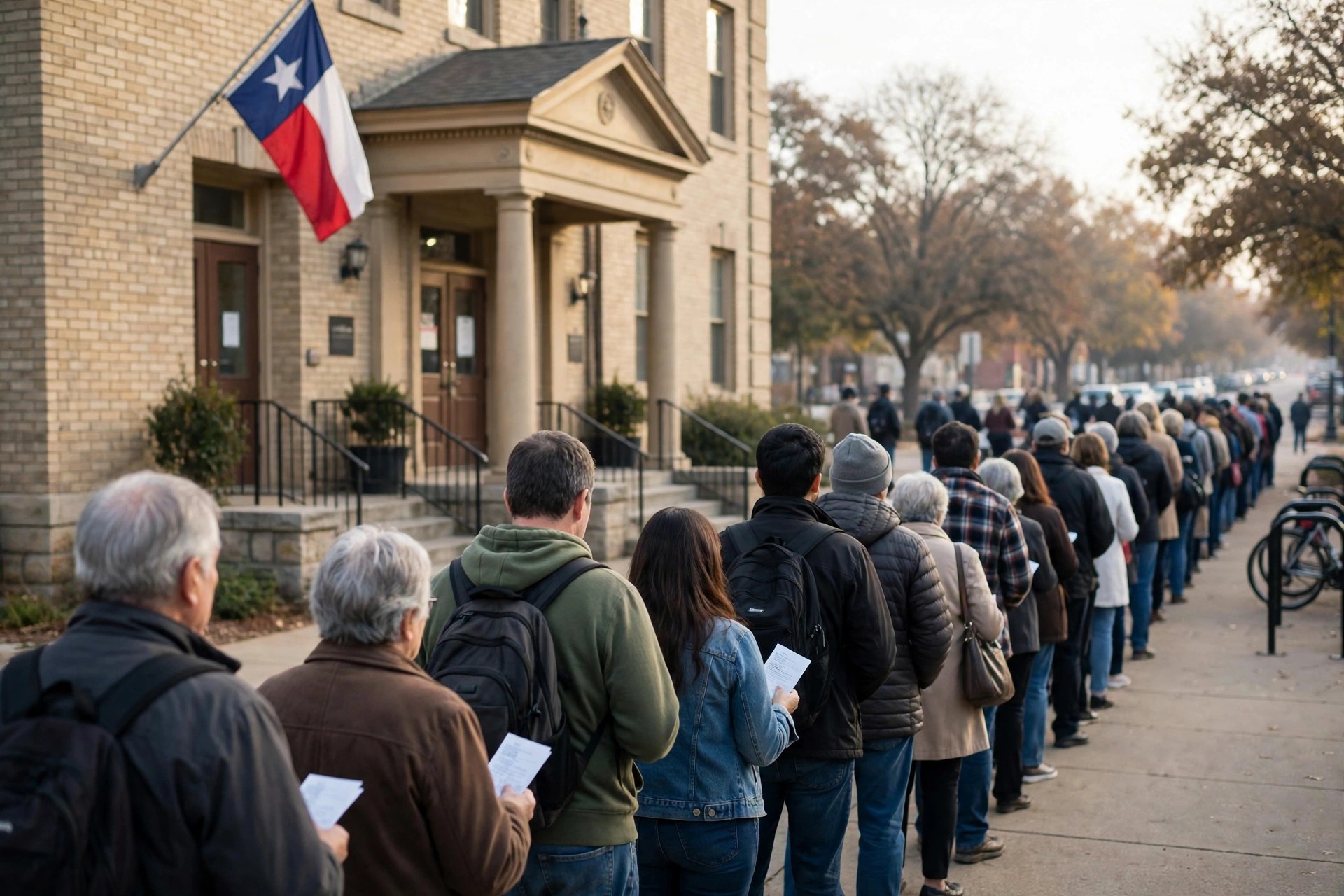
HOUSTON - For all the records this station has reported this week, the rate tells a cooler story. Nearly 4.5 million Texans cast a ballot in the first seven days of early voting - a pace ahead of the 2022 midterm but slightly behind 2018, when Beto O'Rourke fell 2.6 points short of unseating Sen. Ted Cruz. From October 19 through Sunday, 23.4 percent of registered Texas voters had voted in person or by mail, according to Secretary of State data reported by the Texas Tribune, against 24.3 percent in the first seven days of 2018. A record 19 million Texans are registered for the November 3 election, 7.7 percent more than before the 2022 midterm - which is how raw totals can set records while the rate runs behind.
The composition is the number both parties are arguing about. Texas voters do not register by party, so analysts read the early electorate through past primary participation. Republican consultant and data analyst Derek Ryan's count of first-week voters: 35 percent had previously voted in a Democratic primary, 33 percent in a Republican primary, about 29 percent had no prior primary history or only general-election participation, and 4 percent had mixed primary histories. Ryan called the Democratic-primary lead unprecedented - in 2022 and 2024, Republican-primary voters held the larger share at this point. Democratic strategist Matt Angle said the early vote is meeting his party's benchmarks - about 40 percent of the final vote from large urban counties and under 25 percent from rural counties - while GOP strategist Vinny Minchillo, calling himself cautiously optimistic, said the early Democratic surge also pushed Republican turnout up after the first days. Hispanic voters made up 18 percent of early voters as of Sunday in Ryan's data, up a point from 2024 and two from 2022; Angle said Democrats want Latino voters at about 24 percent of the final vote.
The cautions and the calendar matter as much as the split. Rice University political scientist Mark Jones warned against over-interpreting early numbers without good benchmarks - counties self-report to the state, the picture is incomplete, and every election's early electorate is a little different. Ryan expects the final three days of early voting, Wednesday through Friday, to deliver 20 to 30 percent of all votes cast in this election, and he predicts as many as 10 million Texans may turn out in all, putting final turnout near 2018's 53 percent. His number to watch is the more than 2.1 million Texans who voted in one of the last four Republican primaries but have not yet voted in this general election: for Republicans to have a chance, he said, a significant number of them have to show up - and the picture gets clearer Thursday and Friday. Early voting ends Friday, October 30.