Texas Early Voting Rate: Nearly 4.5 Million Ballots in the First Week, Ahead of 2022 but Slightly Behind the Beto Year of 2018
Through Sunday, 23.4 percent of registered Texas voters had already cast a ballot - ahead of the 2022 midterm pace, just behind 2018's 24.3 percent, and with voters who previously voted in Democratic primaries narrowly outnumbering Republican-primary voters for the first time an analyst can recall.
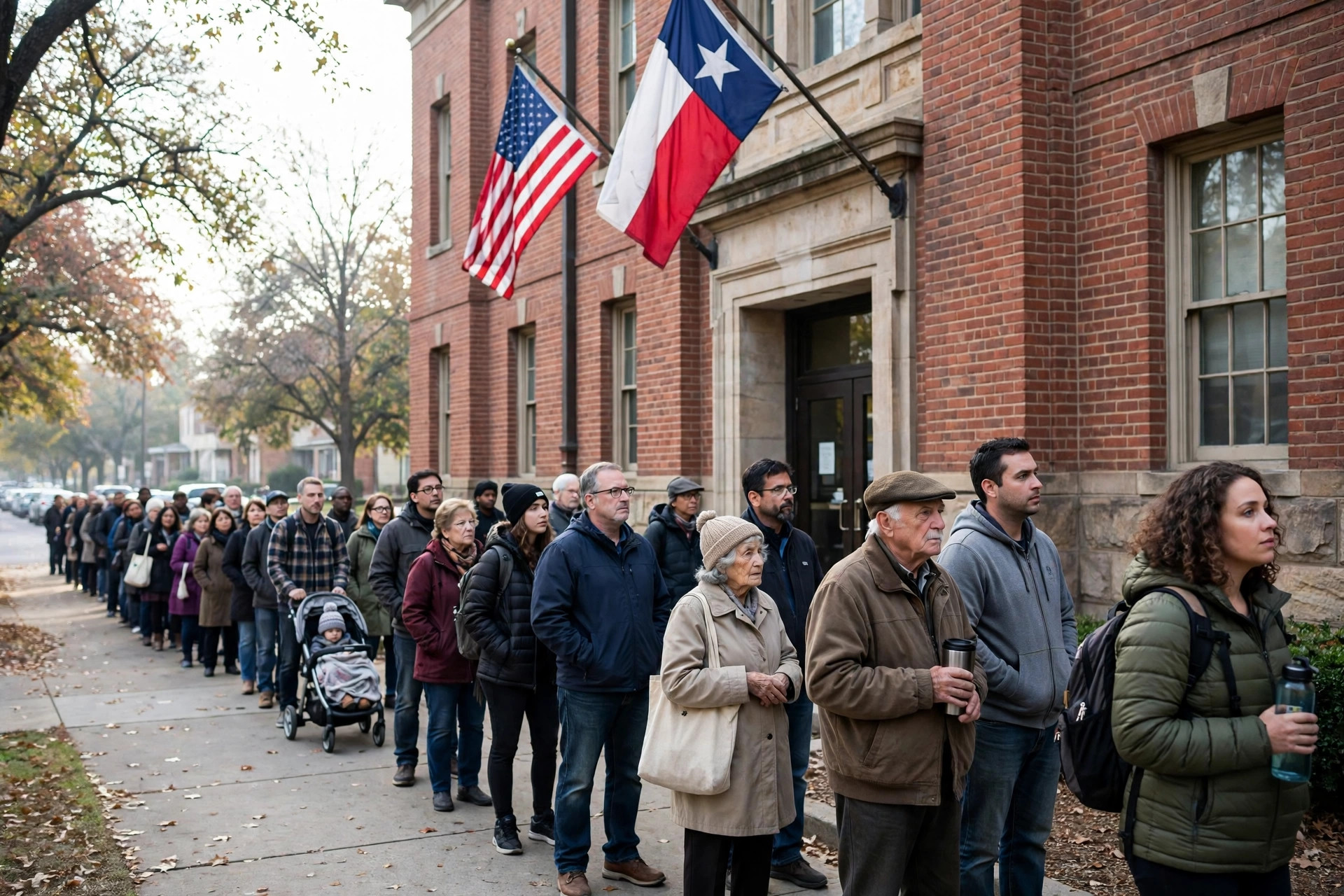
Nearly 4.5 million Texans cast a ballot in the first seven days of early voting - outpacing the turnout rate of the 2022 midterm election but slightly behind 2018, when Democrat Beto O'Rourke fell 2.6 points shy of toppling U.S. Sen. Ted Cruz, the Texas Tribune reported. From October 19 through Sunday, 23.4 percent of registered Texas voters had cast a ballot or voted by mail, according to data from the Texas Secretary of State. In 2018, the turnout was 24.3 percent in the first seven days of early voting. A record 19 million Texans are registered to vote in the November 3 election, 7.7 percent higher than the number registered ahead of the November 2022 midterm.
Derek Ryan, a Republican consultant and data analyst, expects the pace to increase this week, leading to a busy Friday, when the early voting period closes. "We could see anywhere between maybe 20 to 30 percent of the votes that get cast in this election get cast on Wednesday, Thursday and Friday this week," he said. Ryan predicts that as many as 10 million Texans may turn out, which would put 2026's final turnout in the neighborhood of 2018's 53 percent. His analysis of the first seven days found that voters who had previously voted in a Democratic primary accounted for 35 percent of ballots cast, slightly ahead of 33 percent for Republican primary voters, with about 29 percent having not previously voted or participated only in a general election and 4 percent showing mixed primary participation. The early Democratic numbers were unprecedented, Ryan said: "This is actually new territory. I don't think that I ever recall a point where voters with previous Democratic primary history have outnumbered voters with previous Republican primary history."
Every analyst in the reporting attaches the same warning label. Texas voters do not register by political party, so the partisan makeup of the early vote can only be estimated from past primary participation and demographics, and each county self-reports its daily results to the state, making the picture incomplete. "I think there's sometimes a tendency to over-interpret early vote numbers because we don't have good benchmarks," said Mark Jones, a political science professor at Rice University, in Houston. "It's an evolving process, and every election tends to be a little unique." Early voting runs through Friday, October 30, ahead of Election Day on November 3 - and by Ryan's count, more than 2.1 million Texans who voted in one of the last four Republican primaries have yet to vote, the bloc he says Republicans need to see at the polls this week.