A Melanoma Cell Therapy Built for Houston's Labs Nears Its Moment: Immatics Says Its Phase 3 Trial Finishes Enrolling by Year-End
The company operates a 100,000-square-foot research and cell-therapy manufacturing plant in the Houston area. Its lead therapy's topline data is expected in the first half of 2027 - and its cash, $536.3 million, is now projected to last into late 2028.
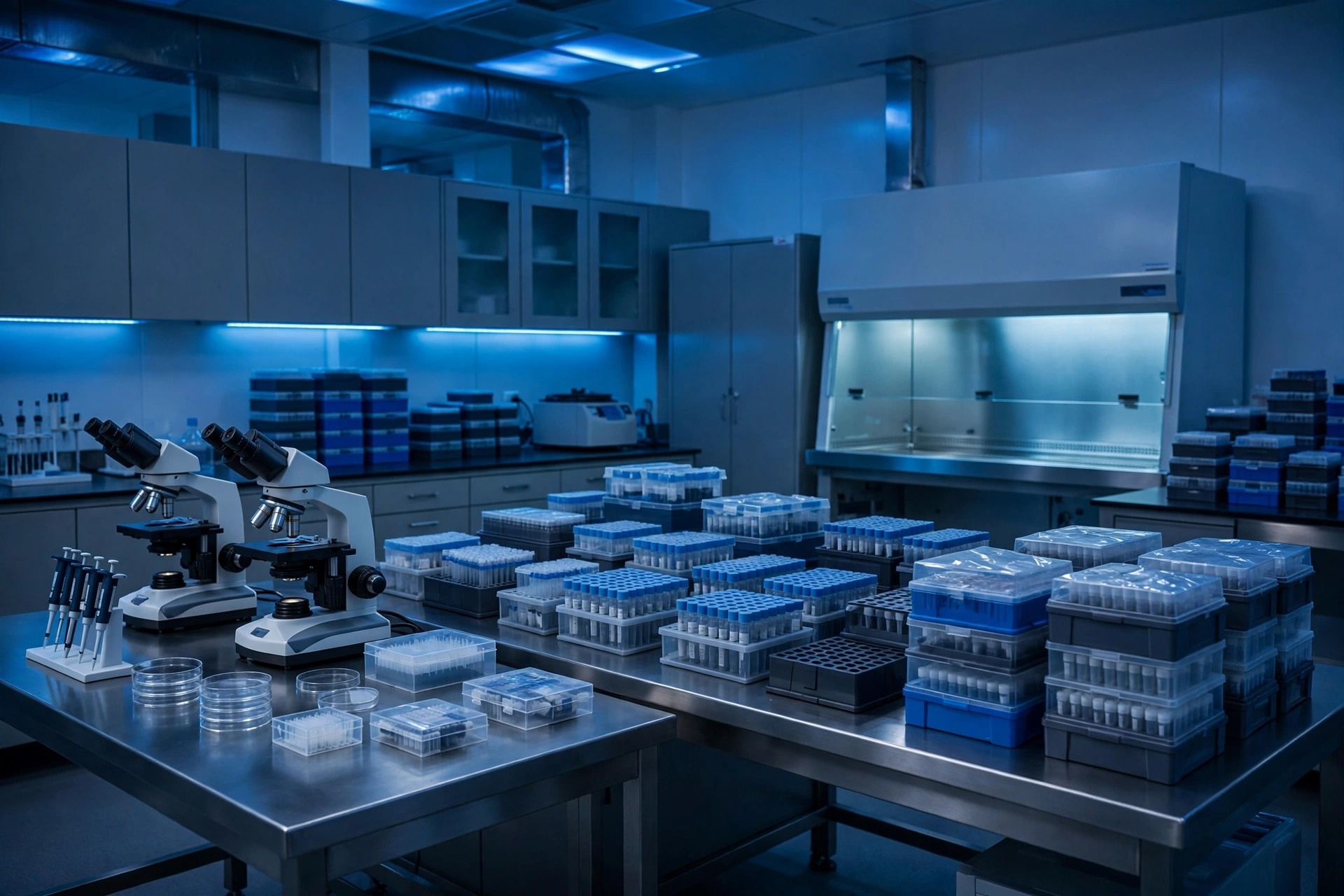
One of the Houston area's largest biotech bets has a date circled. Immatics N.V. (Nasdaq: IMTX) reported Tuesday that enrollment in SUPRAME - its global Phase 3 trial of the cell therapy anzu-cel in previously treated, advanced melanoma - remains on track to complete the required randomizations by year-end, setting up the final analysis of the trial's primary endpoint. The company, which reports from Houston and Tuebingen, Germany, operates a fully functional 100,000-square-foot research and cell-therapy manufacturing facility in the Houston metropolitan area, built to support its clinical trials and, if regulators agree, commercial supply.
SUPRAME is the test that decides the therapy's future. The randomized, controlled trial, running in North America and Europe, compares anzu-cel as a single therapy against an investigator's choice of treatment in patients whose unresectable or metastatic melanoma has already been treated with a PD-1 checkpoint inhibitor. Immatics expects to disclose topline data from the final progression-free-survival analysis in the first half of 2027, followed by a submission for a biologics license in 2027. Nothing in Tuesday's update changes the therapy's status today: it is investigational, and no approval has been sought yet.
The supporting programs reported new early data. The company's IMA203CD8 cell therapy, presented at the ESMO Congress 2026, showed a confirmed response rate of 55 percent and a median response duration of 8.4 months in gynecologic cancers at clinically relevant doses, the company said; its IMA402 bispecific showed a 32 percent confirmed response rate, a 12.5-month median response duration and a 91 percent one-year survival rate in PRAME-high advanced melanoma in Phase 1b data. Those are early-phase figures, reported by the company, and they are carried here as exactly that.
The balance sheet gives the science time. Cash, cash equivalents and other financial assets stood at $536.3 million at September 30, 2026, and the company's projected cash reach now extends into the fourth quarter of 2028 - past the SUPRAME readout and the planned license submission. The quarter's net loss was $86.3 million, against $57.3 million a year earlier, in the company's Form 6-K filed with the SEC on Tuesday. For Houston's medical economy, the headline is simpler: a therapy being manufactured at Houston-area scale is about seven months from the data on which its approval case will stand or fall.