After the Midterms, Houston's Flood-Mitigation Priorities Face a Reset, a Lake Houston Watchdog Warns
The officials who carried Houston's post-Harvey flood program are nearly all leaving at once. A longtime Lake Houston flood writer argues the newcomers must be taught the three needs — less water in, more water through, faster water out — before nine years of progress stalls.
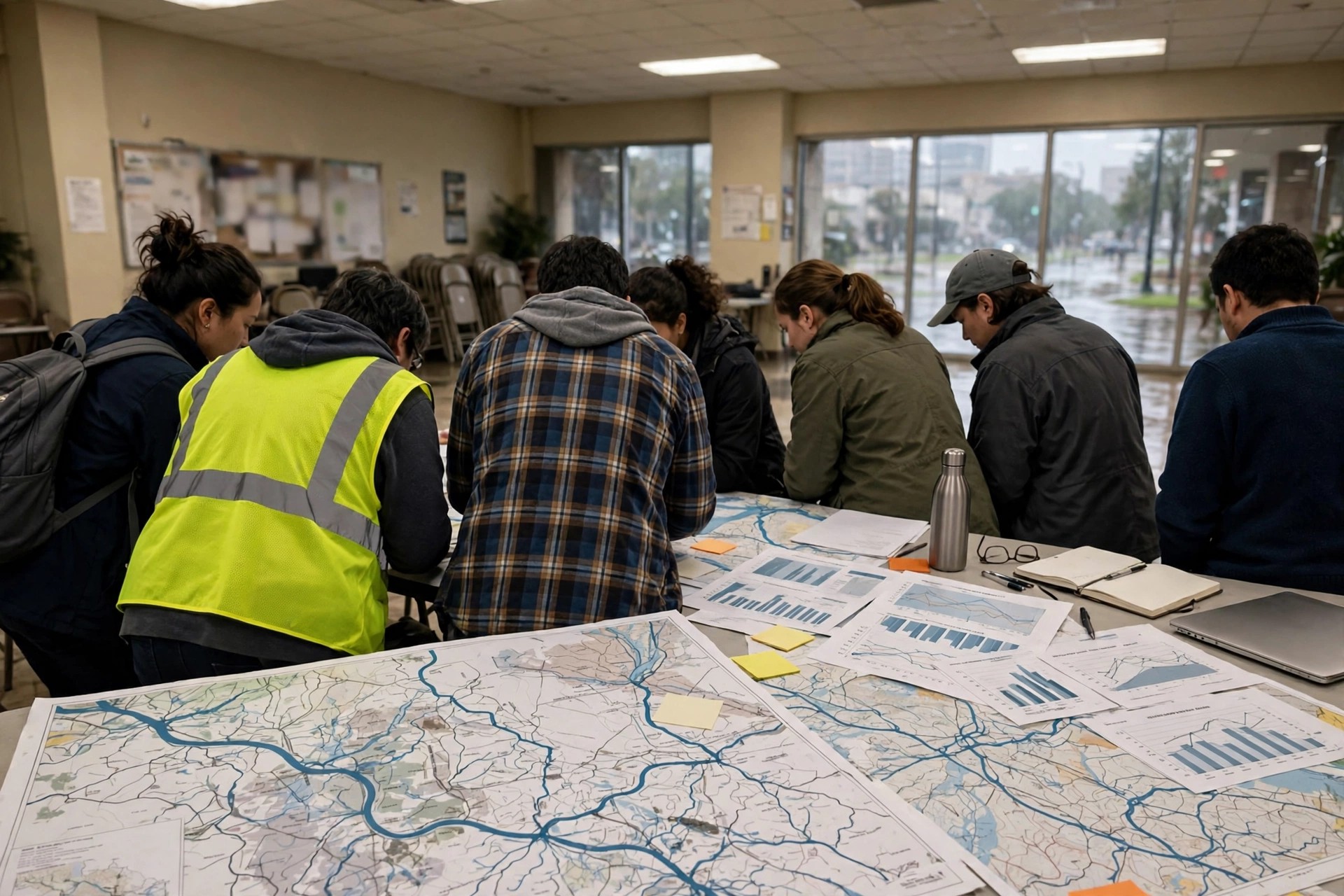
Houston's flood program is about to change hands all at once, and a longtime Lake Houston watchdog is warning that the handover itself is a risk. In a Nov. 9 post, Reduce Flooding writer Bob Rehak argues the 2026 midterms 'have the potential to hit the reset button on flood-mitigation priorities' — because Governor Greg Abbott, Land Commissioner Dawn Buckingham, State Rep. Charles Cunningham, Harris County Judge Lina Hidalgo and Congressman Dan Crenshaw are all being replaced by newcomers, in what he calls a regime change, with Democrats now holding a majority of the House in Austin and both chambers in Washington.
His concern is institutional memory. New leaders, he writes, may not share their predecessors' priorities and will not have the background the outgoing officials built in the nine years since Hurricane Harvey — the post is dated 3,359 days after the storm. 'We must inform new leaders about local flood-mitigation needs,' he writes, 'so we don't squander any progress made after Hurricane Harvey.'
The needs themselves are documented, not new. The Lake Houston Area Task Force, started by the late Humble ISD leader Guy Sconzo after Harvey, settled on three: less water in, through upstream retention; more water through, by dredging blockages and increasing conveyance; and faster water out, through additional gates on the Lake Houston Dam, especially before major storms. The outgoing era's work list runs from the 2018 Harris County Flood Bond and the Atlas 14 rainfall statistics to the State Flood Plan and the Lake Houston Dam Improvement Study.
The stakes figure in his post comes from the 2024 State Flood Plan: 27 percent of people in the San Jacinto River Basin live or work in floodplains — a share he says is probably even higher in Harris County. His closing argument is that flooding is a public-safety issue that should be non-partisan, and that new leaders should push the existing projects across the finish line instead of starting over. Whether they do is now a January question, in Austin and in the Harris County Commissioners Court alike.